Table of Contents
Are you looking for a natural way to relieve your airways, improve your skin, or simply give your immune system a boost? A visit to a saltarium, also known as a salt room, is rapidly gaining popularity within the wellness world. But what exactly happens in such a space, and why is it so beneficial? In this article, you'll discover everything about how it works, its benefits, and who halotherapy is intended for.
A saltarium is a specific type of terrarium designed for plants that thrive in saline or salty environments.
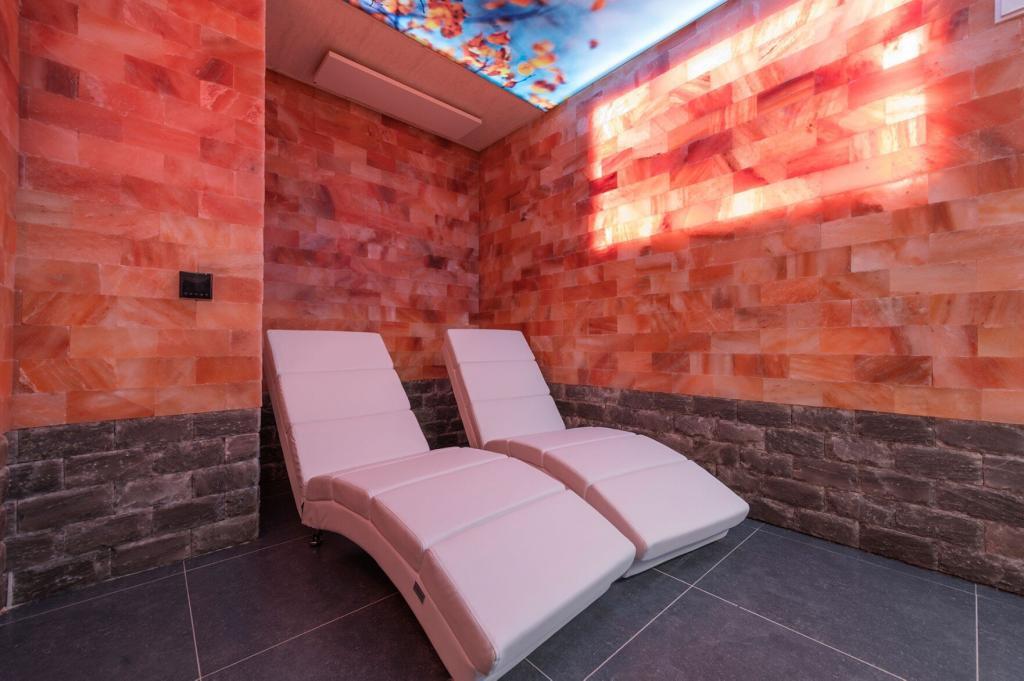
A saltarium is a specially designed room where the walls and ceiling are covered with white salt or Himalayan salt stone. In our wellness centre, large chunks of Himalayan salt have been manually attached with a natural salt plaster. We have deliberately chosen a salt plaster without chemical binders to prevent irritation to the eyes or respiratory tract.
Although the salt stone walls provide a relaxing atmosphere (ideal in combination with the view of our fireplace), the real power of the salt room comes from a modern device: the Halogenerator.
How does salt therapy (halotherapy) work?
The halogenerator disperses minuscule salt aerosols into the air. You breathe these fine salt particles directly in, allowing them to go to work deep within your body. This process imitates the potent air you'd find at waterfalls, by the sea, or in natural salt caves.
The science behind salt
Salt therapy is more than just relaxation; it has a direct impact on your biology:
- Strengthens the immune system It increases the number of white blood cells (phagocytes and macrophages) that destroy pathogens such as bacteria and viruses.
- Airway clearance It works as a natural stimulant for your mucous membranes, reduces oedema (fluid accumulation) in the bronchi, and helps to expel waste products.
- Skin repair When dealing with skin problems, the salt has a bactericidal and anti-inflammatory effect. It stimulates microcirculation and helps the skin to regenerate more quickly.
Who is the salt room intended for?
Halotherapy is commonly referred to as “a holiday for the lungs.” Based on clinical reports, a session in the saltarium is particularly effective for people with the following conditions:
Respiratory problems
- Asthma and chronic bronchitis
- Hay fever and allergic rhinitis
- Sinusitis
- Cystic fibrosis
- Smoking shoes
Skin conditions
- Psoriasis and eczema (atopic dermatitis)
- Acne and inflammation (abscesses or folliculitis)
- Scar revision after surgery
General health
- Burn-out and stress: Negative ions have a beneficial effect on the psyche.
- City residents: People who often come into contact with fine particulate matter or industrial pollution (Sick Building Syndrome).
Origin: From salt mine to wellness
The foundation for this therapy was already laid in 1839 by the Polish doctor Dr Feliks Boczkowski. He noted that workers in salt mines almost never suffered from lung problems, unlike other miners. Later, after the Second World War, the German doctor confirmed Dr K.H. Spannahel this phenomenon in people who had sheltered in salt caves. This formed the basis for modern halotherapy as we know it today.
Practical information: How often and for how long?
For optimal results, consistency is important. A session lasts for children an average of 30 minutes and for Adults 60 minutes.
- Recommended frequency: A minimum of 3 visits per week.
- Cure A series of at least 10 consecutive sessions yields the best effect.
- Maintenance: It is advisable to repeat this course of treatment 2 to 3 times a year.
When is a salt room not suitable?
Although halotherapy is very safe, there are situations where the body cannot use the extra stimulation of blood circulation and lymph. Avoid the salt room in cases of:
- Fever or acute infections (flu, severe cold)
- High blood pressure or heart failure
- Active tuberculosis or malignant diseases
- Pregnancy (due to limited research)
- Drug addiction or acute intoxication
Would you like to experience the healing power of salt for yourself? Then book your spot in our saltarium and completely unwind with a view of the fireplace.